
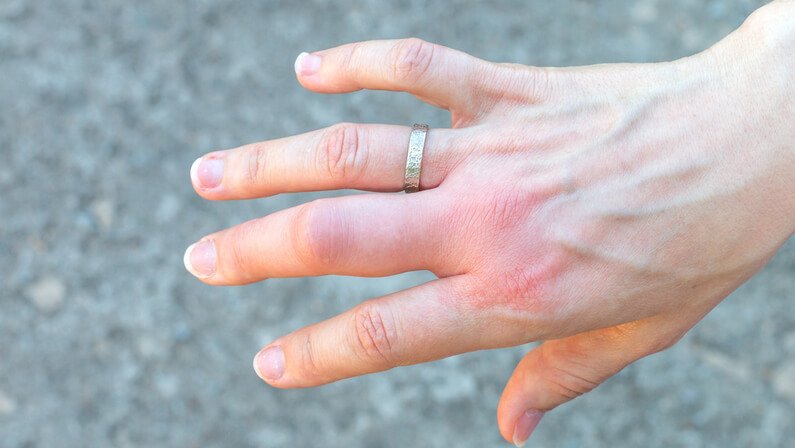
As kids get more involved in sports and outdoor play, finger injuries become increasingly common. One of the most frequent is a jammed finger, which usually happens when the middle joint of the finger called the proximal interphalangeal (PIP) joint takes the brunt of an impact.
Most jammed fingers are minor sprains, but sometimes the injury can be more serious, leading to tendon damage or even a fracture. Knowing the difference between a simple jam and a more concerning injury can help parents decide when it’s time to seek emergency care.
What Causes a Jammed Finger?
Jammed fingers often happen during sports that involve balls basketball, baseball, and volleyball are some of the biggest culprits. A finger can jam when trying to catch, block, or hit a ball, forcing the joint to bend awkwardly or absorb sudden pressure. The tissues around the joint may stretch or tear, which is why swelling and pain often follow quickly after the injury.
Jammed vs. Broken Finger: How to Tell the Difference
It’s not always easy to tell whether your child’s finger is just jammed or if it’s actually broken. Some signs can help you figure it out:
- Sprains or jams usually cause swelling, pain, and limited motion, but most kids can still move the finger at least a little.
- Broken fingers may look deformed or bent at an odd angle. Children may struggle or be unable to move the finger at all. Swelling, bruising, stiffness, numbness, or tenderness can also point to a fracture.
If you’re unsure, it’s always safer to have the injury checked what looks like a mild sprain could sometimes turn out to be a small fracture.
When to See a Doctor or Visit the ER
Most minor finger jams improve within a day or two with rest, ice, and support. But you should seek medical attention if:
- The pain is severe and not improving after 24–48 hours
- The finger appears bent, misshapen, or darkly discolored
- Your child cannot move the finger at all
- There is numbness or tingling in the finger
- The swelling keeps getting worse
Untreated finger fractures can lead to long-term stiffness, arthritis, or loss of motion, so it’s important not to delay if you’re concerned.
How Doctors Diagnose Finger Injuries
At First Priority ER, our emergency team will start with a physical exam and check your child’s range of motion. Often, a jammed finger will still have some movement, while a broken finger will not. To confirm the diagnosis, we use onsite X-rays, which give us a clear view of the joint and bone so we can recommend the right treatment.
Treatment Options
Treatment depends on how serious the injury is. A mild jam may just need rest, ice, and buddy taping (where the injured finger is taped to a healthy one for support). For fractures, treatment may involve splinting, casting, or in more severe cases surgery followed by rehabilitation.
The good news is that with the right care, most children recover fully and return to their normal activities without lasting problems.
Expert Emergency Care for Active Kids
If you suspect your child has a fractured finger, don’t wait and hope it improves on its own. At First Priority ER in New Braunfels and Cibolo, we’re open 24/7 with board-certified physicians, onsite imaging, and the expertise to quickly diagnose and treat finger injuries.
Whether it’s a simple jam or a more serious fracture, our team is here to help your child heal safely and get back to doing what they love.
👉 Don’t risk long-term damage. Visit First Priority ER for fast, compassionate emergency care when your child’s finger injury needs immediate attention.

